An honest account of a trekking day in Bwindi or the Virungas — the briefing, the walk, the hour, and how hard it really is.
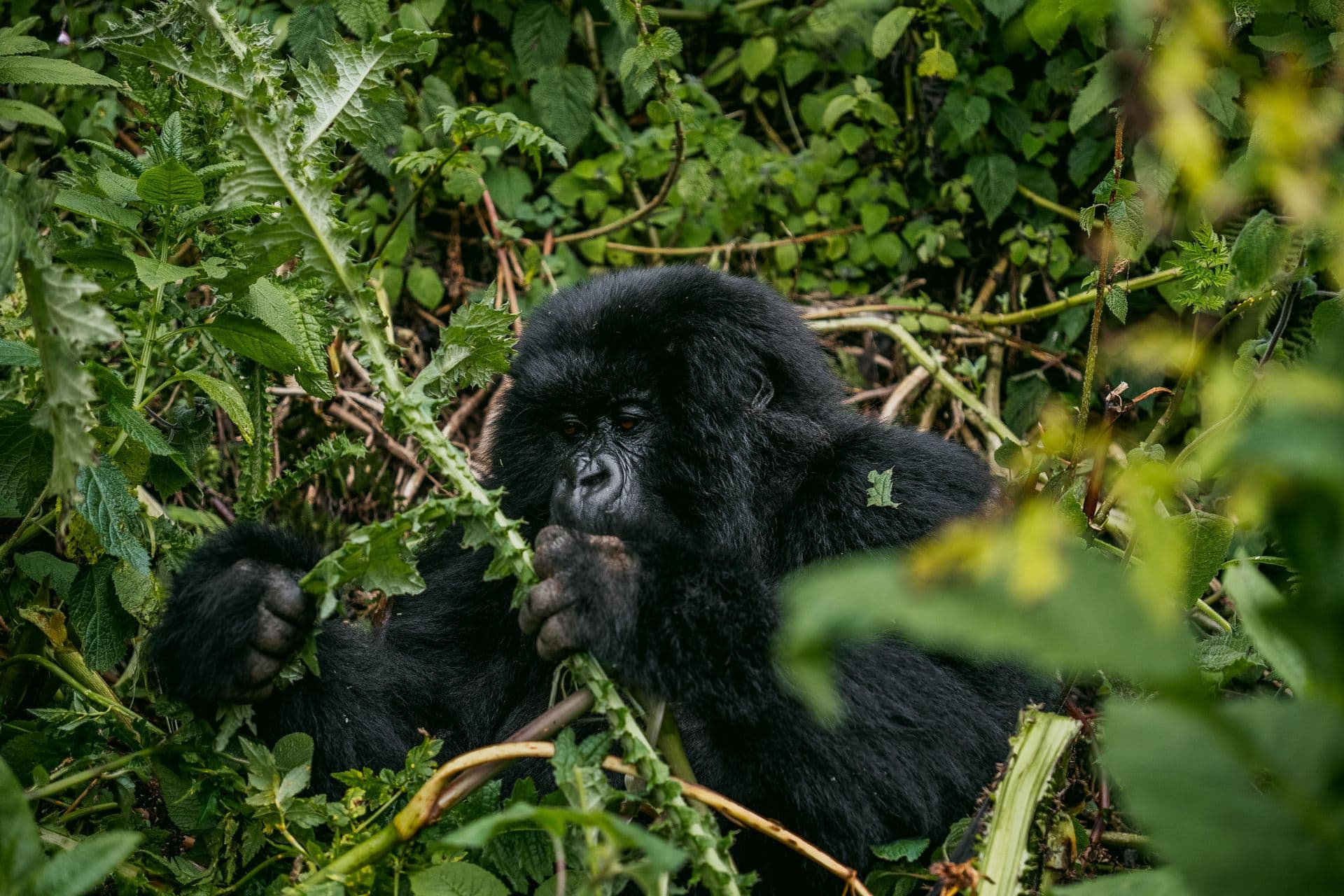
Gorilla trekking is the most affecting wildlife encounter in East Africa and also the most physically demanding thing most of our guests do. It helps to know what the day involves before you commit to it.
The briefing
You arrive at park headquarters by seven in the morning. Rangers divide visitors into groups of no more than eight, each assigned to one habituated gorilla family. The briefing covers the rules: stay seven metres back, no flash, no eating near the animals, and if you have any infectious illness you will be turned away. These rules exist because gorillas share enough of our physiology to catch what we carry.
The walk
This is the part that varies. Trackers have been with your family since dawn and radio their position, but "position" can mean forty minutes away or five hours. The forest is steep, wet and thick — Bwindi is called the Impenetrable Forest for a reason — and there is no path in the usual sense. A ranger cuts through the vegetation ahead of you.
Hire a porter. They cost very little, they will carry your bag and physically haul you up the steep sections, and the work matters to the communities around the park. Everyone who declines one regrets it by hour two.