The migration is a year-round circuit, not a single event. Here is roughly where the herds are in each month, and what that means for where you should be standing.
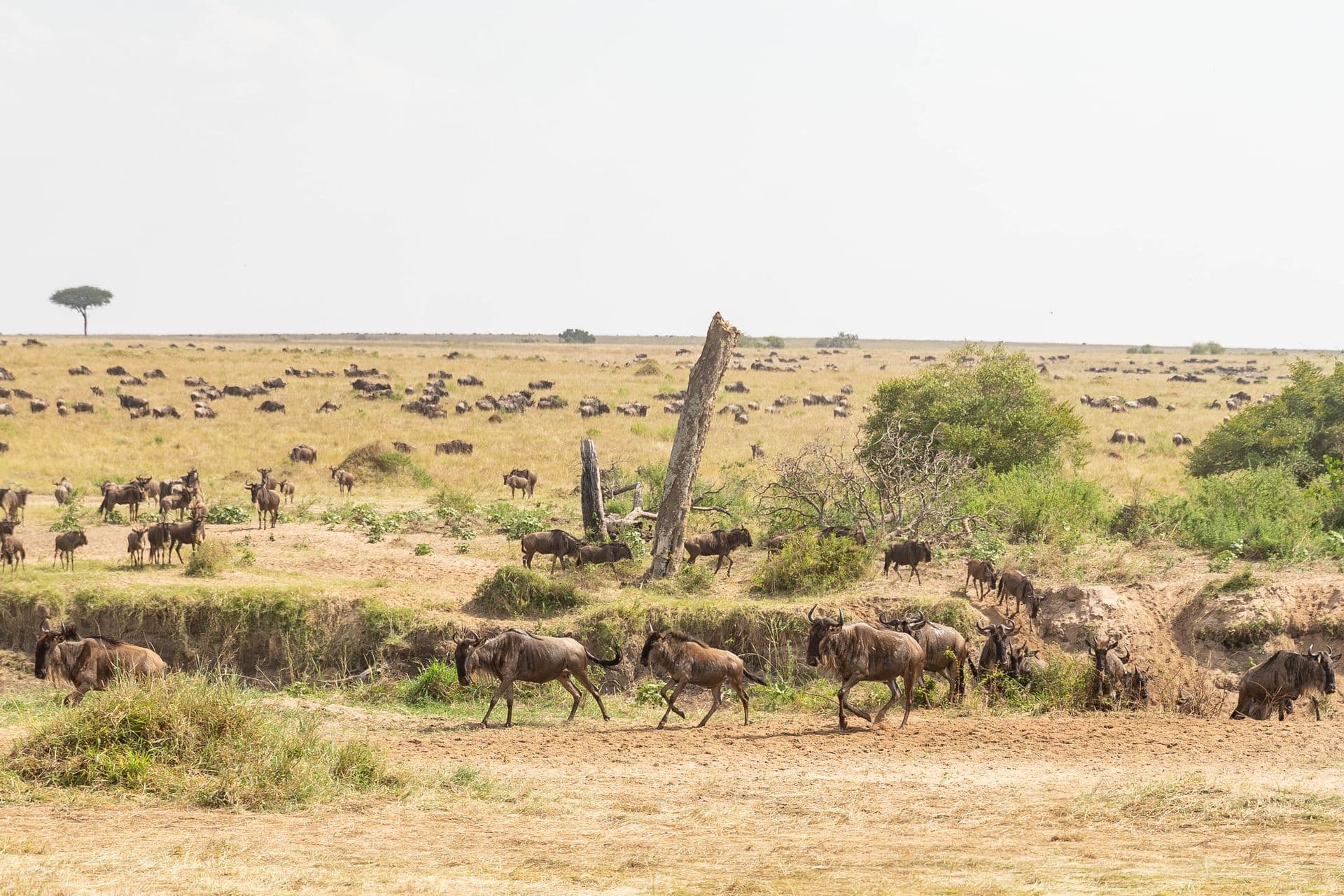
The Great Migration is often sold as a fixed event on a fixed date. It is not. Around two million wildebeest, zebra and gazelle move in a continuous loop between the Serengeti and the Maasai Mara, following rainfall and grazing, and they have been doing it for far longer than anyone has been selling tickets to watch.
Knowing roughly where they are in a given month is the difference between a good trip and a frustrating one.
December to March — the southern Serengeti
The herds spread across the short-grass plains around Ndutu. Calving peaks in February, when something like 8,000 calves are born each day. Predator activity is at its most intense of the year: this is when you are most likely to see a hunt, and cheetah in particular do well on open ground.
April and May — the long rains
The herds begin moving north-west through the central Serengeti. Many camps close and the tracks are difficult. It is also the cheapest and emptiest time of year, and the country is green and beautiful. A trade-off worth considering if you are not fixed on river crossings.